
MGM Osaka on Yumeshima: How Japan Is Building Its First Integrated Casino Resort
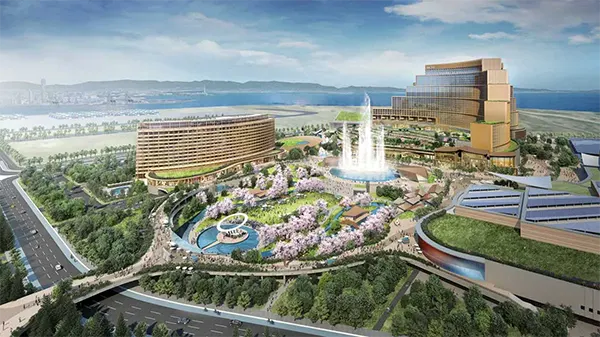
As of September 2026, Japan’s first integrated resort with a casino is no longer a proposal on paper: major construction is under way on Yumeshima, the artificial island in Osaka Bay that also hosted Expo 2025. The project, commonly referred to as MGM Osaka or Osaka IR, is scheduled to open around autumn 2030 if the current timetable holds. It is being developed as a large tourism and business complex rather than as a stand-alone casino, combining hotels, conference and exhibition facilities, entertainment, restaurants, retail, cultural attractions and a tightly regulated gaming area. That distinction matters because the project is also Japan’s first practical test of the national integrated-resort policy created by the 2018 IR law. With a current official investment estimate of about ¥1.513 trillion before tax, MGM Osaka is one of the largest private developments in Japan and will be watched closely for its economic results, visitor demand and approach to gambling-related risks.
From National Approval to a Live Construction Site
The route to construction took years because Japan did not simply legalise ordinary commercial casinos. The national government created a framework in which casino gaming can operate only as one part of an approved integrated resort, with the host local government, the resort developer and national regulators all involved. Osaka Prefecture and Osaka City submitted their area development plan with the MGM-ORIX consortium in 2022, and the national government certified it on 14 April 2023. Important commercial conditions were then settled through implementation agreements, and the developer’s remaining termination right expired in September 2024. That removed one of the main uncertainties surrounding the project. A formal ground-breaking ceremony was held on 24 April 2025, when full construction work began on the IR site. By 2026 the project had moved firmly into the building phase, and MGM Resorts continued to state publicly that the Osaka development remained on track for a 2030 opening.
The company behind the development changed its name from Osaka IR Corporation to MGM Osaka Corporation in May 2025, reflecting the MGM brand that will be central to the resort. MGM Resorts International and ORIX are the two core private-sector sponsors, while a group of Kansai companies also participates in the investment. The financial scale has increased since the plan was first approved. An earlier estimate of about ¥1.27 trillion was revised upward as construction materials, labour and other development costs rose. The current Osaka government plan puts total funding at approximately ¥1.513 trillion before tax. Roughly 65 per cent is expected to come from equity and about 35 per cent from bank borrowing, with major Japanese banks involved in the lending group. These figures are important because they show that MGM Osaka is not being built as a small casino project with a hotel attached; it is a full-scale urban tourism development with a capital requirement comparable to major transport and redevelopment schemes.
The physical scale is equally substantial. The official plan covers about 492,000 square metres of land and roughly 780,000 square metres of total floor space. Construction is expected to continue until around summer 2030, leaving a short period for final preparation before the planned autumn opening. The schedule is long because the site requires several large buildings, utility systems, transport links and public-safety infrastructure to be completed in a coordinated way. In July 2026 MGM Osaka also reported another minor change notification to the approved area development plan, showing that detailed planning is still being refined while construction progresses. Such changes are normal in a project of this size, but the important point for readers in 2026 is that the opening date remains a target rather than a finished fact. MGM Resorts said in its July 2026 financial results that the project was still on track for 2030, while Osaka authorities continue to use autumn 2030 as the planned opening period.
Why Yumeshima Became the Chosen Site
Yumeshima was selected because it offers something central Osaka cannot easily provide: a very large waterfront site that can be planned as a single district. The island is reclaimed land in Osaka Bay, west of the traditional city centre, and for many years much of it was used for port-related or undeveloped purposes. Expo 2025 changed that position dramatically by bringing international visitors, new transport capacity and major public attention to the island. The IR is being constructed on a separate part of Yumeshima from the former Expo grounds, but the two projects are closely connected in Osaka’s long-term development strategy. The city’s aim is for the investment made around the Expo to support a permanent tourism and business district after the six-month exhibition has ended, rather than leaving Yumeshima dependent on a single event.
Rail access is already in place. Osaka Metro extended the Chuo Line by 3.2 kilometres from Cosmosquare to the new Yumeshima Station, which opened on 19 January 2025. The extension was designed first to handle Expo traffic but was also identified from the start as the main rail link for the future IR. That gives the resort direct metro access to central Osaka without requiring every visitor to arrive by road. The broader plan also includes bus and other transport functions intended to move visitors between Yumeshima, the city and the wider Kansai region. This matters because the official forecast is for around 20 million visits to the IR each year. A resort drawing that number of people cannot depend on private cars or taxis alone; rail capacity, pedestrian flows, road management and links to airports and regional tourism routes are part of the business model.
The island location also creates challenges. Because Yumeshima is reclaimed land, Osaka has had to address issues such as liquefaction risk, soil conditions and underground obstacles. These works are separate from the resort buildings themselves but are essential if the land is to support a large complex safely. The city is also planning permanent services for a district expected to receive millions of visitors after the Expo. One concrete example is a new fire substation for Yumeshima: Osaka City’s 2026 plan schedules detailed design work through fiscal 2027, construction from fiscal 2027 to 2030 and opening in fiscal 2030. This is a useful reminder that MGM Osaka is not an isolated private building project. Roads, rail, emergency services, land remediation and later phases of Yumeshima development all have to function together if the island is to become a year-round urban destination.
What the Integrated Resort Will Actually Contain
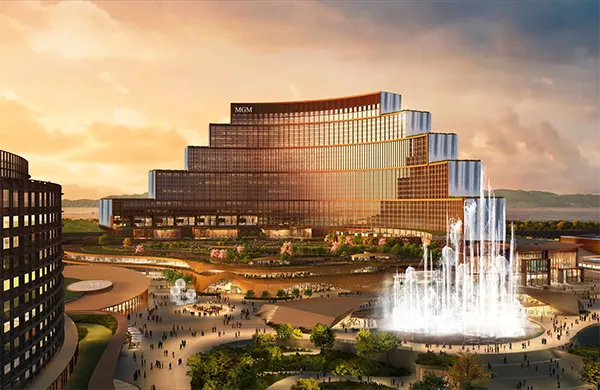
The resort is planned around three hotels with about 2,500 rooms in total. Osaka’s current description divides them by purpose, including an entertainment-focused hotel, a multi-generational resort hotel and a top-end property aimed at luxury demand. The accommodation is only one part of the visitor offer. Restaurants, shops, spa and fitness facilities, banquet space and waterfront areas are intended to keep guests on site for longer stays while still connecting them with Osaka and the wider Kansai region. This is a major difference from the image of a casino as a single gaming hall. The commercial logic is to attract several types of customer at the same time: leisure tourists, families, business travellers, convention delegates, high-spending international visitors and people attending shows or events. The resort therefore has to work even for guests who never enter the casino, because many of its largest facilities are designed for non-gaming use.
Business events are one of the most important non-gaming elements. The planned international conference centre will have a largest meeting room capable of holding more than 6,000 people, while the combined capacity of all conference rooms is expected to exceed 12,000. Exhibition facilities are planned with about 20,000 square metres of exhibition space. These numbers place meetings, incentives, conventions and exhibitions at the centre of the project rather than treating them as an add-on. The entertainment plan also includes the approximately 3,500-seat Yumeshima Theatre and waterfront event areas. Cultural and tourism facilities are intended to present food, art, crafts and regional attractions from Osaka, Kansai and other parts of Japan. A tourism centre is also planned to help direct visitors beyond Yumeshima, supporting the argument that the resort should act as a starting point for wider travel rather than keep all visitor spending inside one complex.
Osaka’s official business forecasts show how ambitious the development is. The authorities expect roughly 20 million annual visits, including about 14 million domestic visits and 6 million from overseas. Annual revenue is projected at around ¥520 billion once operations are established. Of that amount, approximately ¥420 billion is expected to come from gaming and about ¥100 billion from non-gaming activities. In other words, the casino will occupy a small share of the physical resort but is forecast to produce about four-fifths of its revenue. That is one of the most important facts for understanding MGM Osaka. The resort is genuinely broader than a casino in terms of buildings and visitor functions, yet gaming remains central to the financial model. The success of the hotels, events, restaurants and cultural facilities will matter for Osaka’s tourism goals, while the casino is expected to provide much of the cash flow supporting the overall development.
Where the Casino Fits and How Japan Will Regulate It
Japan’s rules deliberately limit the physical size and accessibility of the casino. The gaming area can account for no more than 3 per cent of the total floor area of the integrated resort, and people under 20 will not be allowed to enter it. Entry to the wider resort will not carry a casino admission charge, so a visitor will be able to use hotels, restaurants, entertainment and other non-gaming facilities without paying to enter the gaming area. For Japanese nationals and foreign residents in Japan, however, casino entry will cost ¥6,000 for each applicable 24-hour admission period. Non-resident foreign tourists are exempt from this domestic admission fee. The law also limits casino visits for Japanese people and resident foreigners to three times in seven days and ten times in 28 days. These controls are designed to make frequent spontaneous casino visits more difficult than they are in many established gaming markets.
Identity checks and exclusion measures are another major part of the system. Osaka’s current guidance says strict verification will be used at casino entrances, with My Number cards forming part of the control system for Japanese customers. The national framework also allows people to restrict their own casino access and permits family-related exclusion measures in specified circumstances. MGM Osaka’s responsible-gaming commitments include monitoring for signs of problematic behaviour, access to consultation services and options intended to help customers set limits on gambling expenditure and time spent in the casino. Osaka Prefecture has placed these measures within a broader policy that covers gambling-related harm beyond the IR itself. In March 2026 it adopted its third gambling-addiction countermeasures plan for fiscal 2026 to 2028, while preparations also include a dedicated Osaka addiction-support centre. The effectiveness of these measures will be judged after opening, but they are being built into the project before the first bet is accepted.
The casino will also operate under a much stricter supervisory structure than an ordinary hotel or entertainment venue. Japan’s Casino Regulatory Commission is responsible for the national casino regime, including licensing, compliance and supervision, while the operator must meet rules covering security, anti-money-laundering controls and the exclusion of organised-crime interests. Osaka has said that policing and public-safety capacity around Yumeshima will be strengthened as the opening approaches, and the resort operator is expected to maintain continuous security and extensive surveillance. These controls help explain why the project has taken so long to reach the construction stage. Japan is trying to create a casino sector without reproducing a lightly controlled gambling environment. Whether the framework works as intended will depend not only on the written rules but also on enforcement, data, staff training and the willingness of regulators and the operator to intervene when risky behaviour is identified.
What MGM Osaka Could Change for Osaka and Kansai
The economic case for MGM Osaka rests on more than the money spent inside the resort. Osaka expects the development to create around 15,000 jobs within the IR itself by the third year of operation. Government estimates also point to a much wider annual economic effect across the Kansai region once the resort is operating, including about ¥1.14 trillion in economic ripple effects and an employment effect equivalent to roughly 93,000 jobs. Local procurement is projected at about ¥260 billion a year. These are forecasts, not guaranteed outcomes, and they depend on visitor numbers, spending, supply chains and wider economic conditions. Even so, they show why Osaka has treated the IR as a regional growth project rather than simply a source of casino tax and fees. Hotels, food suppliers, transport operators, event contractors, maintenance firms and tourism businesses outside Yumeshima could all receive additional demand if the visitor forecasts are broadly achieved.
The tourism strategy is equally important. Kansai already has several of Japan’s strongest destinations, including Osaka, Kyoto, Kobe and Nara, while Kansai International Airport provides a large international gateway. MGM Osaka is intended to add a new reason for visitors to stay longer in the region, especially for conventions, entertainment and premium leisure trips. The project’s tourism facilities are designed to direct guests to attractions elsewhere in Japan rather than treat Yumeshima as the final stop. That concept fits the post-Expo strategy adopted by transport and tourism authorities, which is focused on maintaining international attention on Kansai through 2030. The key test will be whether the resort generates additional travel and spending or mainly redirects visitors who would have come to Osaka anyway. A 20-million-visit target is large enough that the answer will affect hotel demand, transport use and visitor flows well beyond the island.
For Osaka itself, the project is also a long-term bet on the bay area. Expo 2025 made Yumeshima globally visible for one year, but a permanent district needs reasons for people to return after the Expo structures are removed or repurposed. The IR is intended to become the anchor for later phases of development on the island and nearby waterfront areas. At the same time, the scale of the plan means the risks are real. Construction costs have already risen substantially, the operating forecasts depend heavily on gaming revenue, and the resort will add demand for labour in a country facing demographic pressure and staff shortages in hospitality and construction. Public authorities must also manage traffic, policing, emergency response and gambling-related harm. The project therefore cannot be judged only by whether the buildings open on time; it will need to show that the wider economic benefits are large enough to justify the public infrastructure and policy effort surrounding it.
What to Watch Before the Planned 2030 Opening
The first issue is whether the construction programme can stay on schedule and within its revised budget. From September 2026, there are still about four years until the targeted autumn 2030 opening, leaving plenty of time for labour shortages, material prices, design changes or complex site work to affect costs. The official investment figure has already moved from roughly ¥1.27 trillion to about ¥1.513 trillion before tax. A minor change to the approved area development plan was also notified in July 2026, confirming that the project continues to evolve while work proceeds. None of this means the opening is in immediate doubt: MGM Resorts said in July 2026 that Osaka remained on track for 2030, and Osaka authorities are planning surrounding services to the same timetable. Still, readers should treat 2030 as the current target, not as an unconditional promise made four years in advance.
The second issue is whether the demand forecasts and social safeguards hold up in practice. The projection of 20 million annual visits and ¥520 billion in annual revenue is central to the economic case, yet about ¥420 billion of that revenue is expected to come from gaming. That makes responsible-gambling controls more than a secondary policy matter. Osaka will need to show that entry limits, identity checks, self-exclusion, family-based restrictions, consultation services and problem-gambling monitoring are working as intended. It will also need reliable public reporting so residents can compare actual results with the promises made before opening. The same applies to direct jobs, wider employment effects and local procurement. A development of this scale will produce large numbers, but the meaningful question is how much new value is created for the region after costs, displacement effects and public-service needs are taken into account.
The third issue is whether MGM Osaka succeeds as an integrated resort rather than only as a high-revenue casino. Japan’s policy model depends on the casino financing a broader mix of hotels, exhibitions, conventions, entertainment and tourism services under tight regulation. By 2026, the project has advanced far enough that the debate is no longer about whether there is a construction site on Yumeshima: there is one, and work has been under way since April 2025. The next stage is about delivery. If the resort opens in autumn 2030 as planned, Japan will finally have a real-world example of the IR system created in law years earlier. Its performance will be measured not only by gaming revenue but by visitor patterns, convention business, regional tourism, local purchasing, employment, public safety and the handling of gambling-related harm. Those results will determine whether MGM Osaka becomes a model for future Japanese IR development or remains a one-off experiment centred on Osaka Bay.