
Casino de Sanremo: how a classic land-based casino survives without mass tourism
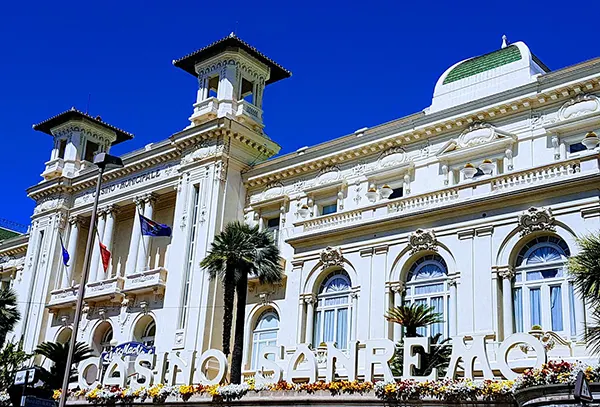
Casino de Sanremo remains one of the few European land-based casinos that continues operating without relying on large-scale tourist flows. Located in Liguria near the French border, the venue has faced decades of structural pressure from regulatory changes, declining casino tourism, and competition from modern gambling formats. Yet it has not disappeared. Its survival tells a different story from the usual expansion-driven casino narrative.
A financial model built around local demand
Unlike resort casinos designed for international visitors, Casino de Sanremo operates primarily on revenue generated by residents of the Ligurian region and neighbouring French communities. Regular patrons form the core of its income, creating a stable but limited financial base. This approach reduces volatility but places strict limits on growth.
Slot machines remain the main source of revenue, reflecting broader Italian market trends. Table games play a secondary role, maintained more for tradition than profitability. Operating costs are closely managed, with limited reinvestment and cautious staffing policies shaped by long-standing municipal ownership.
Public ownership has influenced financial decisions for decades. The municipality of Sanremo treats the casino not as a high-growth enterprise but as a controlled economic asset. This model prioritises continuity, employment preservation, and predictable cash flow over aggressive expansion strategies.
The role of local players in long-term stability
Local players exhibit different behaviour compared to destination gamblers. Average session lengths are shorter, spending patterns are conservative, and loyalty is driven by familiarity rather than novelty. This creates modest margins but reduces exposure to sudden market shocks.
Promotional activity is limited and targeted. Rather than large-scale campaigns, the casino relies on routine incentives and established relationships. This restraint aligns with Italian regulatory expectations and avoids the financial risks associated with high acquisition costs.
The dependence on a regional audience also means revenue closely follows local economic conditions. During downturns, spending contracts quickly, leaving little buffer. Stability exists, but it is narrow and demands constant operational discipline.
Cultural and historical significance beyond gambling
Casino de Sanremo opened in 1905 and occupies a historic Art Nouveau building that forms part of the city’s architectural identity. Its value extends beyond gaming, functioning as a cultural landmark rather than a pure commercial venue.
The building hosts concerts, exhibitions, and civic events, integrating the casino into Sanremo’s cultural calendar. These activities do not generate substantial profit, but they reinforce public support and justify municipal involvement in its preservation.
In Italy, where public attitudes towards gambling remain cautious, this cultural positioning has helped the casino maintain legitimacy. It is seen less as a gambling venue and more as an institutional space with historical continuity.
Why heritage matters in regulatory environments
Italian gambling regulation has tightened steadily since the 2010s, particularly around advertising and machine density. Heritage casinos like Sanremo benefit indirectly from their established status, which offers some regulatory stability compared to newer operators.
The historical narrative provides political cover for continued operation. Closing the casino would not only eliminate a business but remove a symbolic institution linked to local identity and employment.
This heritage-based argument does not guarantee protection, but it shifts the discussion from profitability alone to social and cultural considerations. That distinction has proven important during periods of financial difficulty.
The future of traditional casinos in Europe
The case of Casino de Sanremo illustrates the limitations facing classic land-based casinos in modern Europe. Without mass tourism or major reinvestment, growth potential remains minimal, and survival depends on careful cost control.
Digital competition has permanently altered gambling habits. Even loyal local players increasingly divide their activity across physical and remote options, reducing foot traffic without eliminating it entirely.
For many European municipalities, the question is no longer expansion but whether controlled continuity is sufficient justification for ongoing operation.
Can this model remain viable after 2026
Long-term viability depends on maintaining relevance without attempting transformation beyond financial capacity. Incremental upgrades, regulatory compliance, and cultural integration remain the most realistic path.
Casino de Sanremo is unlikely to return to former prominence, but its existence demonstrates that survival does not always require scale. In specific local contexts, modest operations can persist.
This model may not be replicable everywhere, yet it offers insight into how legacy casinos can coexist with modern gambling realities rather than compete directly with them.